

People express love in many different ways. We figure out what we can offer, what to share, and what will bring joy. Whether through hugs or thoughtful gifts, we find our unique love languages and grow more fluent in them as we practice.
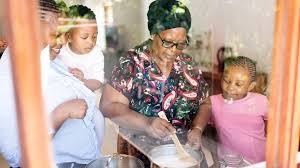
Food is a universal language of love, and within the Black community, this love runs profoundly deep. It stems from the desire to nourish others, spend meaningful time together, uphold traditions, and do so within our means.
Despite enduring the impacts of racial inequality—ranging from loss of life to living in food deserts—one skill everyone knows is how to ensure no one goes hungry.
Food as a Vessel of Culture
Food serves not only as a gesture of love but also as a vital way to preserve and nurture culture.
Migrants carry the knowledge of their homelands with them, bringing along native names for ingredients and traditional cooking techniques. Black parents take care to teach their children and grandchildren these names and the skills required to transform those ingredients into beloved dishes.
In this way, food becomes a powerful repository of memory.
For example, black-eyed peas on New Year’s Day symbolize prosperity and secure their place on the table year after year. Everyone eating from that pot recalls past celebrations, who cooked the peas, and the wisdom shared by the elders.
Likewise, jerk chicken evokes memories of a trip to Jamaica, where authentic spices were gathered, and a great-aunt revealed her secret recipe for the best potato salad.
As children, we’re often summoned into the kitchen to assist with dinner preparations.
Take the chicken out of the freezer before Mom arrives. Peel potatoes for the potato salad. Grate cheese for macaroni pie. Wash the rice. Boil the eggs. Shred the cabbage. Shell the peas. Chop the onions. Mince the meat.
Elders make sure we learn how to handle these tasks. As we grow older, our duties expand.
Go to the butcher to pick the right cuts of meat. Clean the chicken thoroughly. Watch the pot closely. Keep stirring—don’t stop.
No Written Recipe—Only Love
We spend so much time in the kitchen and gathered around the dining table that the memories formed are endless. During special meals, any number of those moments might surface, whether for us or those sharing the table.
We know exactly what dishes are essential for each holiday or occasion. What the younger generation needs guidance on is the process itself.
How is it that we spend hours helping elders cook without ever learning exact recipes?
First of all, there are no strict recipes. Even when a relative jots one down, it’s only a rough guide. No written instructions can truly explain how to turn food into an expression of love.
Our grandmothers instruct us to add “a handful of cheese,” cook the pasta “until halfway done,” then let it sit a bit—“but not too long!” They warn us against rinsing after draining. Their measurements come in handfuls, sprinkles, dashes, or “just enough,” but our hands aren’t their hands. Their directions might be “a coin-sized piece” or “a pinch,” leaving us longing for precise cups and tablespoons.
When we call them for help, their hesitant “ummm” lets us picture them, eyes closed, searching for a similar-sized ingredient or texture.
“Please, Grammy,” we silently plead. “Just tell me: this much macaroni, this much cheese, this much milk. First do this, then that.”
Grammy replies, “Just a little of this, a dash of that. Do it until it looks like pancake batter. Maybe a bit thicker.”
Our elders urge us to simply trust ourselves and get started. It feels like they have more faith in our instincts than we do.
We search for recipes and call relatives, hunting for exact measures and steps. But all we really remember is how the dish looked on our plate—the taste and the feelings it stirred the last time we had it.
“What were you doing all that time when I was cooking?” they ask.
We grumble about peeling potatoes but then hear Grammy’s soft chuckle.
“How many potatoes did you peel?”
Suddenly, everything returns. We know how many potatoes feed our household. We recall the mound of grated cheese. We might have missed when the chicken was seasoned, but we remember how it looked going into the oven. We can guess how many sprigs of rosemary were added.
We rely on the colors and aromas of the seasonings, adjusting as we go.
Black Cooking as Community Building
Black elders don’t hand down recipes—they offer something far richer. Their menus live in our memories. The scents of their kitchens remain with us. They teach us to work efficiently, turning preparation into second nature.
As adults, we’re given the freedom to experiment, grounded by years of guidance and the taste of delicious food.
We come to understand that cooking isn’t just a science—it’s an art born from feeling.
We joke about sprinkling ingredients “until the ancestors say, ‘Stop,’” but there’s truth in that. We learn to follow our intuition, to be creative, and to make every meal a full experience—from prep to the final bite.
Black cooking builds community. Black meals are shared experiences. Black creativity is a daily ritual that transforms nostalgia into fresh memories.

Love this! Celebrating culture through food is such a powerful way to connect and honor traditions.
Beautiful tribute to Black culinary creativity — cooking by intuition really captures the soul of the food.
This article really highlights the richness and depth of Black food culture. So inspiring